The Claims Desk as a Single Point of Failure: TPA Dependency in UK MGA Portfolios
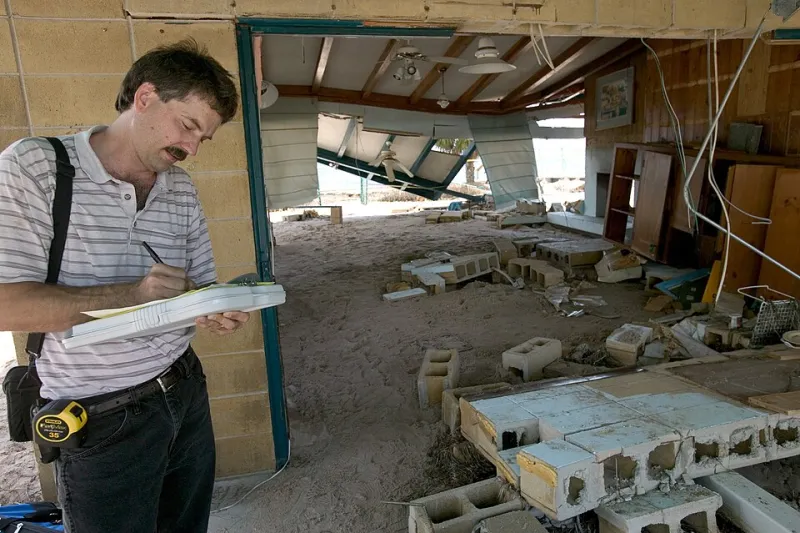
Photo: Andrea Booher, Public domain, via Wikimedia Commons
A procurement label on an underwriting exposure
Many UK managing general agents delegate claims handling to a single third-party administrator and record the arrangement as an operational matter. The contract is filed, service levels are monitored, and the relationship is reviewed alongside other supplier agreements. That treatment understates the exposure. Claims handling is where delegated authority becomes visible to policyholders, regulators and capacity providers. It determines reserving confidence, complaint volumes, Consumer Duty outcomes and the MGA's ability to demonstrate that it controls the business it underwrites.
When one administrator handles every claim, the MGA is not simply buying a service. It is concentrating a set of interdependent risks in one legal entity, one management team, one technology stack and, often, one set of regulatory permissions. Those risks are intangible in the sense that they do not appear as physical damage or bodily injury, but they are underwritable. They can impair the MGA's ability to respond to claims, damage its relationship with capacity, and reduce the value of the delegated authority itself.
The UK market has made this more acute. Third-party administrators have consolidated, changed ownership and, in some cases, withdrawn from niche lines. Capacity providers are asking sharper questions about oversight. MGA boards should expect the claims arrangement to be examined in 2026 capacity reviews with the same rigour applied to underwriting appetite, data quality and reinsurance structure.
Where concentration builds in specialist lines
Concentration is rarely a single contract. It is a chain of dependencies. In specialist property, liability, professional indemnity and construction schemes, a single administrator may handle first notification, triage, adjustment, legal panel instruction, subrogation and recovery. The same administrator may also provide out-of-hours cover, management information and complaint handling. For smaller MGAs, the arrangement can be efficient and defensible. It can also mean that a handful of claims handlers hold the practical knowledge of the portfolio.
The risk is not confined to the MGA's own contract. An administrator may serve several MGAs, placing cross-portfolio pressure on the same people and systems. It may subcontract to loss adjusters, medical experts, forensic accountants or legal panels. Those sub-agreements can create further points of failure that the MGA does not see directly. In a capacity review, the question is not only who handles claims, but which entities, permissions, data stores and individuals must continue to function for the MGA to meet its obligations.
Three stress events: change of control, key-person loss and failure
A change of control is the most common stress event. An administrator may be acquired by a private equity buyer, merge with a competitor or be absorbed into a larger services group. The new owner may reprice services, migrate systems, rationalise niche capabilities or decide that the MGA's line is no longer strategic. Contracts often contain change-of-control clauses, but they may not provide practical continuity. The MGA needs to know whether consent is required, whether service levels survive, and whether transition assistance is priced or merely promised.
Key-person loss is subtler. Claims handling depends on experience that is not always captured in procedures. A technical handler who understands a specialist liability wording, a manager who maintains the capacity provider relationship, or a small team that knows how to escalate a complex loss can be difficult to replace. If those individuals leave, the MGA may retain the contract but lose the capability. Succession planning, retention arrangements and knowledge transfer should be tested before a capacity review, not after a resignation.
Failure is the least likely but most severe event. Administration, insolvency, a cyber incident, regulatory action or loss of permissions can interrupt claims handling at short notice. The MGA must be able to access files, notify policyholders, manage funds and continue open claims. Run-off arrangements, data ownership, file formats, escrow and step-in rights matter. So does the existence of a credible replacement administrator. A contingency plan that has never been tested is an assertion, not a control.
A 2026 diligence agenda
For capacity providers and MGA boards, the following questions provide a practical starting point. They should be answered before binding and revisited at renewal.
- Which legal entity handles claims, what regulated permissions does it hold, and who owns the claims data?
- What proportion of claims volume and severity is handled by the administrator, by line of business and by policy year?
- Which individuals are critical to service delivery, and what retention, succession and knowledge-transfer arrangements are in place?
- What change-of-control, assignment, termination and transition provisions apply, and how have they been tested?
- What service levels, reporting, audit rights and error-remediation obligations are in the agreement?
- What business continuity, disaster recovery and cyber incident plans exist, and when were they last tested?
- Which sub-contractors, loss adjusters, legal panels and data providers support the administrator, and where are they concentrated?
- What happens to open files, funds and reserves if the administrator fails or exits the market?
- How are complaints, Consumer Duty outcomes and regulatory notifications handled and reported to the MGA?
- What are the exit costs, data migration arrangements and file retrieval timelines?
- How does the MGA board oversee the administrator, and what incidents trigger escalation to capacity providers?
- What rights does the capacity provider have to step in, appoint a replacement or require a transition plan?
The claims desk deserves underwriting attention
The purpose of this diligence is not to discourage MGAs from using third-party administrators. Specialised claims handling can be more effective than a dispersed in-house function, and a well-managed administrator can strengthen an MGA's proposition. The purpose is to ensure that concentration is measured rather than assumed away. A sole administrator is a single point of failure, but it is also a manageable risk if the MGA can demonstrate continuity, oversight and exit capability.
In 2026, capacity providers should expect claims dependency to sit alongside underwriting appetite and data quality in the review agenda. The claims desk is not back-office detail. It is where the promises in the binder are tested, and it deserves the same scrutiny as the underwriting box.